No. We own a commercial hot-water pressure washer, much stronger than the kind you can rent at a hardware store, and we still don't point it at a shingle roof. The Asphalt Roofing Manufacturers Association says the same thing, in stronger words than ours. What a roof needs instead is a soft wash: a cleaning solution put on at low pressure, given time to work, then rinsed gently.
Here's what goes wrong with pressure, what a soft wash does, and what to expect afterward if you live in the Portland area, where the north side of a roof is often visibly greener than the rest of it by November.
What does a pressure washer do to asphalt shingles?
An asphalt shingle is a mat coated in asphalt, with a layer of small mineral granules pressed into the top. Those granules are the part that takes the sun and the weather. A pressure washer knocks them loose. The Asphalt Roofing Manufacturers Association (ARMA) puts it plainly: "Never use a pressure washer to clean an asphalt shingle roof as this will cause granule loss and very likely premature failure of the roof system."
The roof can look clean for a while afterward. What's happened is that the shingles have lost part of their protective surface, and the water has been pushed up under the edges of the shingles. A roof is built to shed water downward, so water forced in from underneath is exactly what it isn't designed to handle.
What is a soft wash, then?
A soft wash uses chemistry instead of force. The cleaning solution goes on at low pressure, sits on the roof long enough to kill the moss and algae where they're attached, and then gets rinsed off with low-pressure water. ARMA's own guidance describes the same approach: apply the solution, let it sit on the roof for 15 to 20 minutes, and "rinse thoroughly with low pressure water."
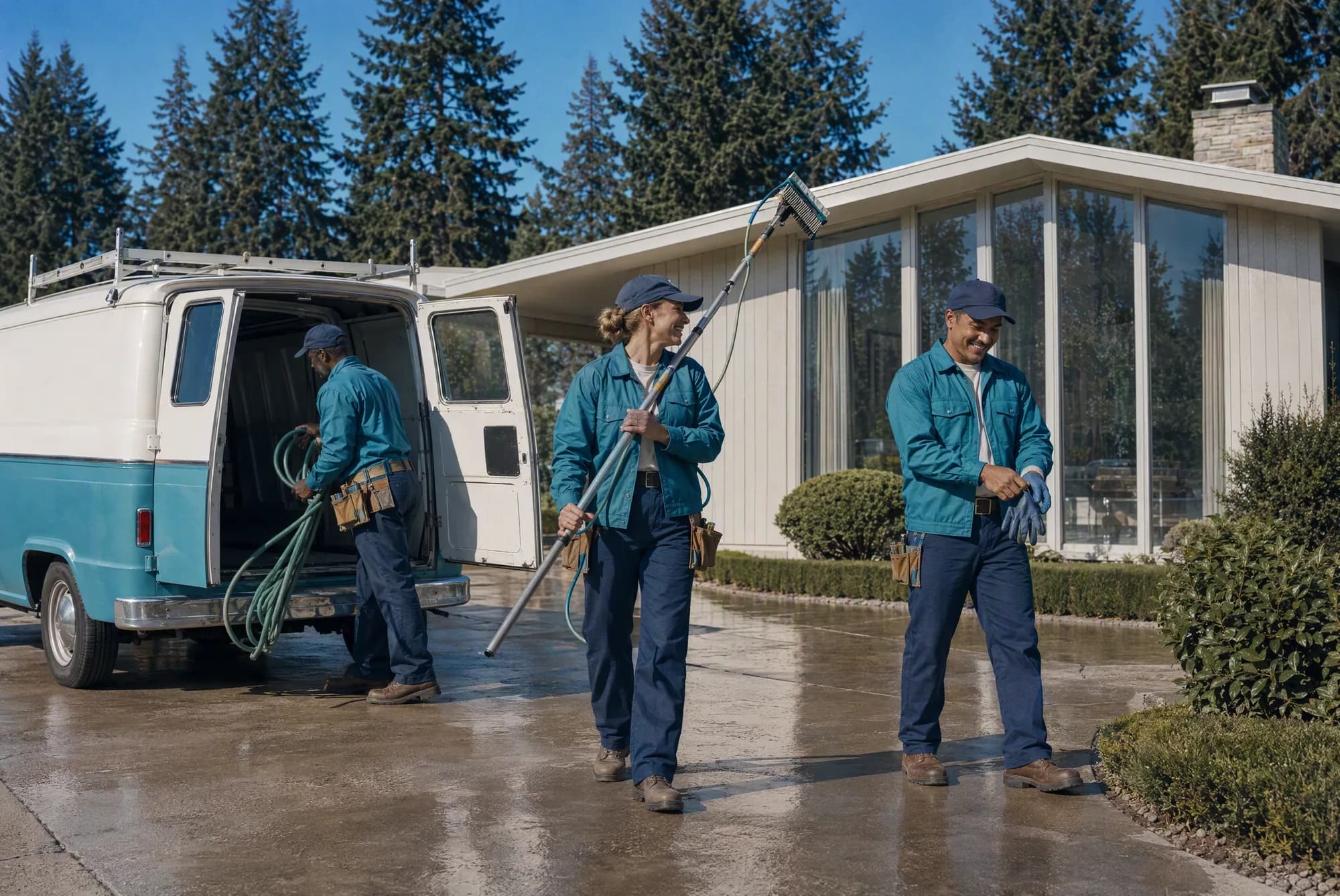
Our truck carries two separate systems for this reason. The hot-water pressure washer is for concrete, which can take it: driveways, walkways, parking lots, and the concrete around dumpsters. The soft-wash system is for roofs and siding, where the goal is to clean the surface without wearing it down.
Why doesn't the roof look perfect the same day?
Because the dead growth takes a little time to let go. ARMA says algae "will disappear and wash away with subsequent rains" and moss "will loosen over time." In Portland that part mostly takes care of itself, since the rain comes back reliably. The streaks fade first, and the moss dries out, loosens and comes away over the following weeks.
A pressure-washed roof looks best the afternoon it's done and then starts to show what the water did. A soft-washed roof looks a little better each week.
Why is the north side of my roof always worse?
It gets the least sun, so it stays damp the longest after each rain, and moss and algae need that dampness to grow. Trees that shade the roof or drop needles on it make it worse, because the debris holds water against the shingles. The same thing shows up on the north side of fences, decks and walkways.
Portland Airport averages about 7 days with rain in September and about 14 in October, going by NOAA's 1991 to 2020 climate normals, so autumn is when a shaded roof that looked fine in August starts turning green.
When is the best time to clean a roof in Portland?
A dry stretch. The solution needs time on the roof before it's rinsed, and a heavy rain in the middle of that washes it off before it's done its job. Late summer and early fall usually have the most dry days, and a good day in October or a dry spell in winter works too. We watch the forecast and book around it.
How often does a roof need it?
It depends on the shade and the trees around the house. A roof in full sun can go longer between cleanings. A roof under firs on a north slope usually needs looking at every year. That's one reason our home plan, a yearly plan that covers the outside of the house, comes out every season: the roof gets checked each visit, and it gets cleaned when it needs it rather than after it's gone fully green.
What does it cost?
It depends on the size and complexity of the house: the number of stories, the pitch of the roof, how easy it is to get to, and how much growth there is. For our yearly home plan, which includes roof care along with the rest of the outside of the house, you can see your price at rinseitoff.com/plan. Put in your address and a few details, and it takes about a minute. You can also text us at (971) 626-4146.