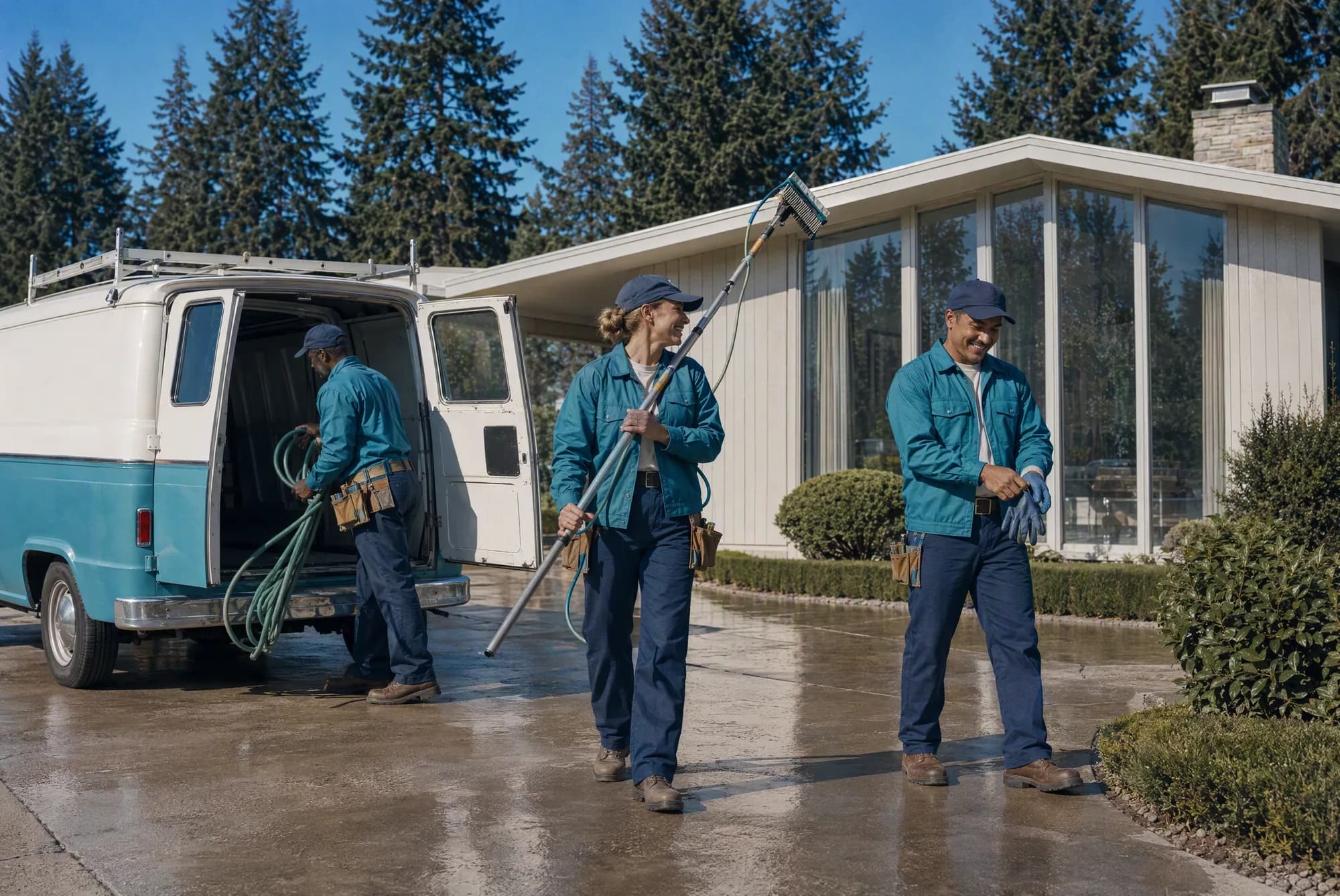
It depends on the surface and how many people walk on it. The answer is different for almost every part of a property. The entrance of a busy grocery store gets dirty much faster than the back wall of a warehouse.
So instead of one number, here is how we think about it, surface by surface, for properties around Portland. Treat these as starting points. After a year of looking at your own property, you'll know better than any rule of thumb.
Why not just wash everything once a year?
You can, and plenty of properties do. The trouble is that the dirtiest parts of a property are also the ones people see and walk on. Gum, spilled coffee and tracked-in grime build up at an entrance in weeks, while the upper walls of the same building might look fine for two years. One yearly wash means the entrance looks bad for most of the year and the walls get cleaned before they need it.
Cleaning each surface on its own schedule keeps the busy areas looking good all year, and it stops you paying to wash walls that didn't need it yet.
How often should entrances and walkways be cleaned?
For a busy storefront, restaurant or office entrance, every one to three months. For walkways that get less foot traffic, two to four times a year.
This is the surface that decides what customers and tenants think of the whole place, because it's the part they're standing on when they open the door. In Portland it's also the surface that turns slick in the fall. Algae and moss grow on shaded concrete once the rain comes back, and a green walkway is a slip waiting to happen.
We clean concrete with hot water, over 200°F, from a commercial pressure washer, run through a surface cleaner. A surface cleaner is a round machine with spinning nozzles inside a hood, and it cleans the concrete evenly instead of leaving the stripes you get from a wand.
What about parking lots and parking garages?
Once or twice a year for most lots, usually in late spring and again before the holidays. Oil spots, tire marks and litter build up slowly, so a lot rarely needs more than that unless it's a drive-through lane or a loading area.
Hot water matters most here. Cold water moves loose dirt, but oil and grease need heat to let go of the concrete.
How often do the building walls need it?
Once a year is a good starting point, and the north and shaded sides of a building often need it more than the sunny sides. That's where the green and black streaks show up first.
Walls get a soft wash, not high pressure. A soft wash is a cleaning solution put on at low pressure, given time to work, then rinsed gently. High pressure can force water behind siding, strip paint and etch softer materials. It also knocks off the streaks without killing what's growing underneath, so they come back sooner.
And the trash pads?
Trash pads are the concrete areas where the dumpsters sit, behind restaurants, stores and apartment buildings. They need cleaning more often than anything else on the property: monthly for restaurants and grocery stores, every one to two months for apartment communities, and every two to three months for most other businesses. We wrote a whole post about cleaning trash pads, because they cause more trouble than their size suggests.
What changes the schedule?
These push a surface toward more frequent cleaning:
- Heavy foot traffic, especially food and coffee
- Shade and trees overhead, which keep concrete damp and feed algae
- Drive-through lanes, loading docks and anywhere trucks idle
- An event, an owner walkthrough, or a property you're trying to lease or sell
Full sun, light traffic and newer concrete that was sealed all let you stretch the time between cleanings.
Is there a way to know what my property needs?
Yes. We do a free 21-point inspection for commercial properties, HOAs and apartment communities, which checks 21 items around the outside of the property, from entrances and walkways to parking areas, trash pads and walls. You get a written report with photos of everything we found, and for each item, how to treat it and how often. Your own maintenance crew can work from it as a checklist, or we can do the work. The report is yours to keep either way, and it comes with a price for the work if you want us to do it.
You can request an inspection here, or text us at (971) 626-4146.