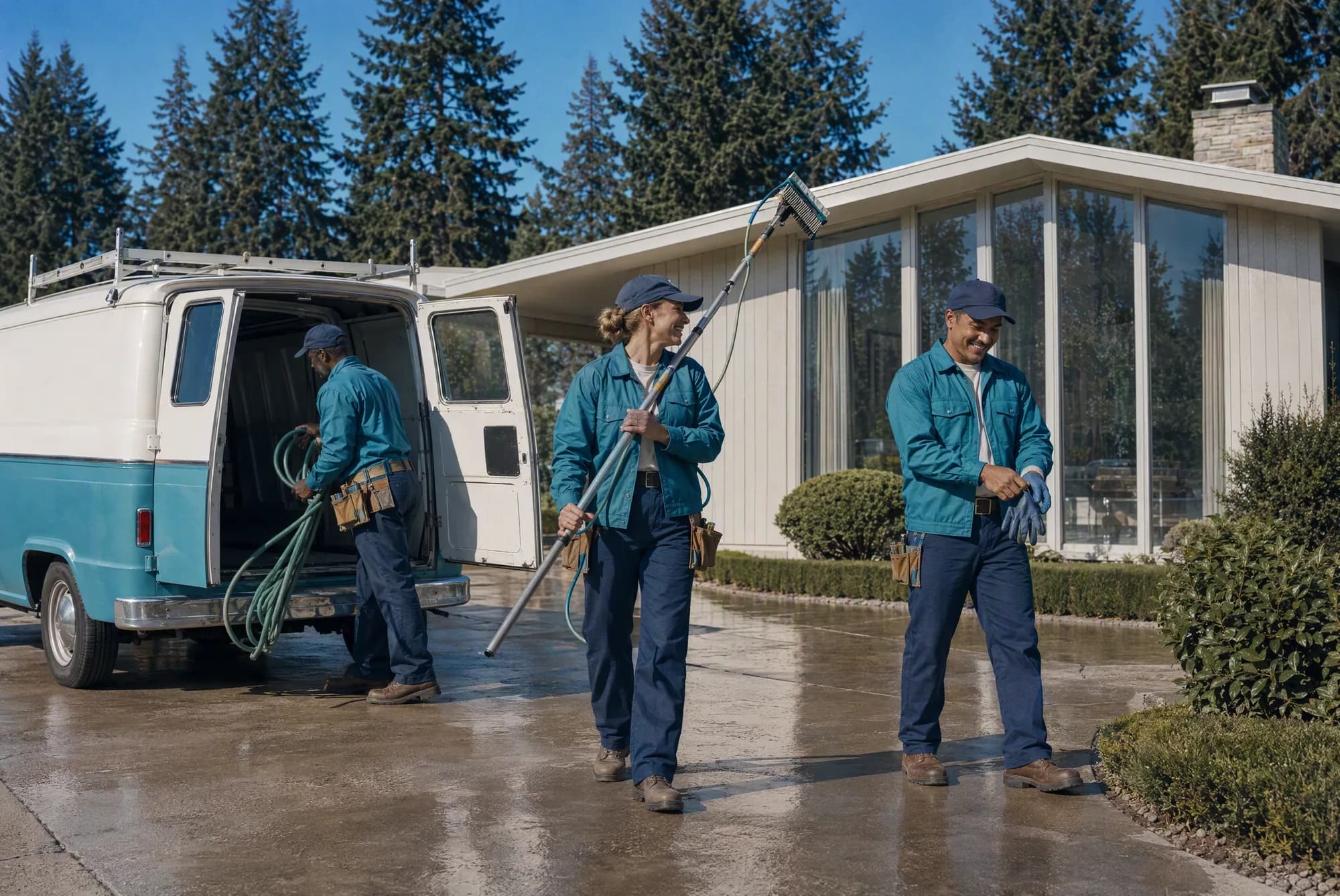
If your shop, café or office sits on a Portland sidewalk, the stretch of concrete out front is the property owner's to look after, not the city's. Here's what the city code says, what the city's repair notices cover, and how often a storefront sidewalk needs cleaning.
Doesn't the city take care of sidewalks?
No. Under Portland City Code 17.28.020, the owners of land along a street are responsible for "maintaining and repairing the sidewalks" next to it, along with the curbs, driveways and parking strips, with a few exceptions written into the code. It also makes property owners liable for damages to anyone hurt because a sidewalk was in a defective condition, or because the owner didn't keep it in safe condition and good repair.
The Portland Bureau of Transportation (PBOT) says the same thing on its Sidewalk Repair Notices page: under the city charter, the sidewalk and the rest of the frontage are the adjacent property owner's responsibility, "consistent with cities across the U.S."
What are the repair notices about?
After someone complains about a sidewalk, PBOT inspects it and can send the adjacent owners a Sidewalk Repair Notice. The common reasons are cracks, trip hazards and chipped concrete, half an inch or more. Those notices are about broken concrete. That's repair work, and we don't do it.
Cleaning is the part we do. That means the gum, the spilled coffee, the grime from everyone's shoes, and in Portland, the moss and algae that come back every fall.
What if I lease my space?
Then your lease decides whether the sidewalk is the owner's job or yours.
Why doesn't a broom do the job?
A broom takes care of the leaves, the cigarette butts and the loose litter, and a shop that sweeps every morning is doing the right thing. What a broom can't do is lift what's stuck to the concrete. Gum, spilled coffee and tracked-in grime build up at a busy entrance in weeks, and oil, grease and gum need heat to let go.
Fall adds another layer. Once the rain comes back, algae and moss grow on shaded concrete, and a green walkway turns slick. Sidewalks under street trees and on the shady side of a building go first. We wrote more about moss and algae on concrete.
What does a proper cleaning include?
We clean concrete with hot water, over 200°F, from a commercial pressure washer, run through a surface cleaner. A surface cleaner is a round machine with spinning nozzles inside a hood, and it cleans evenly instead of leaving the stripes a wand leaves. Heavy spots get an eco-friendly degreaser when they need it.
We don't turn up the pressure on stubborn spots. That's how concrete gets etched. The hot water does the work instead.
Commercial jobs start early. We try to be done before you open, because nobody wants to step over a hose on the way in. We take photos every visit.
How often should a storefront sidewalk be cleaned?
For a busy storefront, restaurant or office entrance, every one to three months. For walkways with less foot traffic, two to four times a year. Shaded sidewalks and the ones under street trees belong at the more frequent end, especially from fall on. Here's how we think about schedules for the rest of a commercial property.
Is there an easy way to know what my property needs?
Yes. We do a free 21-point inspection for commercial properties, HOAs and apartment communities. We walk the property, check 21 points, entrances and walkways among them, and photograph what we find. For each item, the report says what it is, why it matters and how we'd treat it. Your own crew can work from it, or we can do the work. The report is yours to keep either way, and it comes with a price for the work if you want us to do it.
You can request an inspection here, or text us at (971) 626-4146.